 Maxim Skorohod, SkoreHood
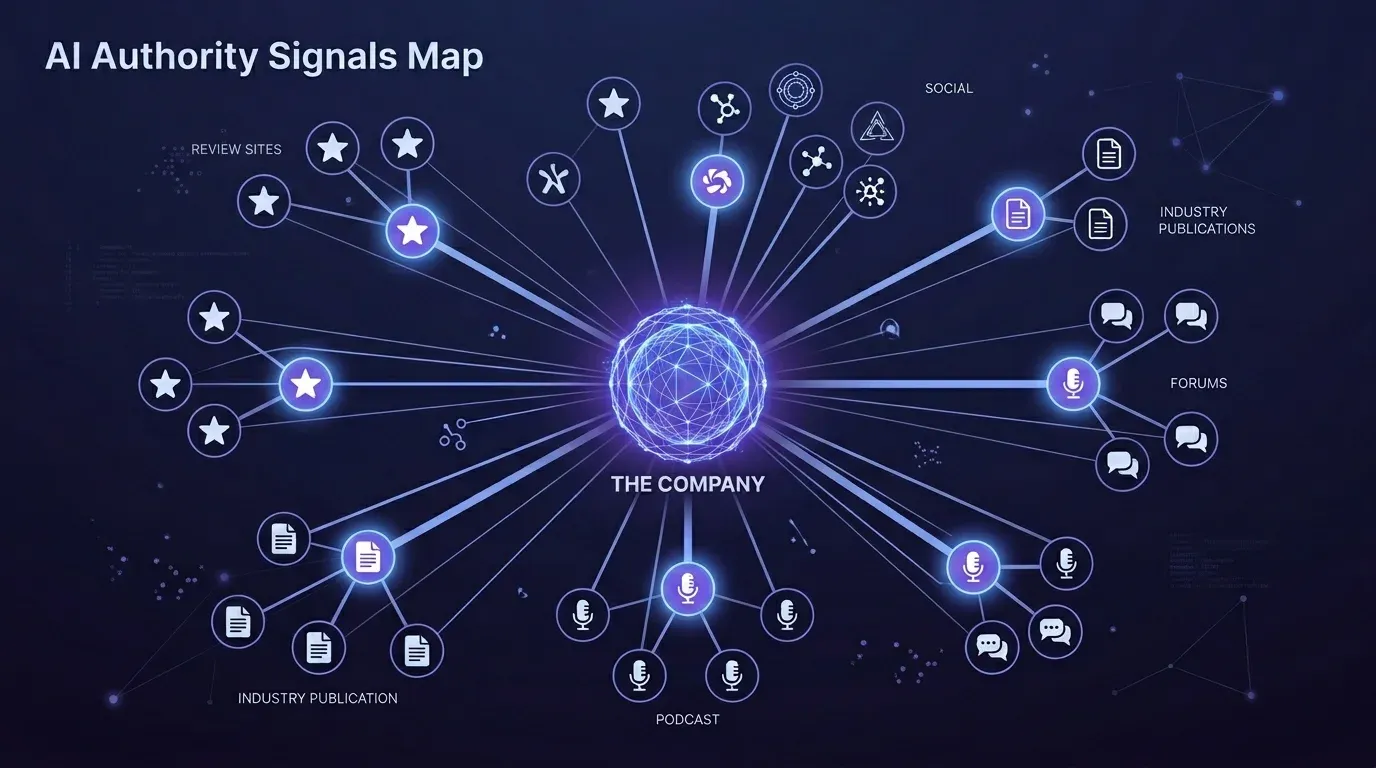
What is GEO and how is it different from SEO?
GEO, short for generative engine optimization, is the work of making a page easy for AI search tools such as ChatGPT search, Perplexity and Google's AI features to retrieve, summarize and cite. It overlaps heavily with SEO. The difference is the output: instead of a ranked list of links, the user gets a written answer that may name two or three businesses and link a few sources.
That changes what a page needs to do. A traditional ranking page can win with a strong title and backlinks. An answer engine also needs passages it can lift cleanly: a clear statement, the conditions it applies to, and a fact or number nearby. If your page makes the reader hunt for the point, the model has little to quote.
Google is direct about the foundation. Its documentation on AI features and your website says the same SEO fundamentals apply to AI Overviews and AI Mode, and that there are no extra technical requirements to appear in them. Treat GEO as a stricter standard for the content you already publish, not a separate trick.
| Classic SEO page | GEO-ready page | |
|---|---|---|
| Goal | Rank in a list of links | Be quoted inside a generated answer |
| Opening | Context, then the answer | Answer first, context after |
| Evidence | Often grouped at the end | Placed next to each claim |
| Structure | Headings for keywords | Headings that match real questions |
| Entity clarity | Name, address, phone in the footer | Who, where, what and for whom stated in the body and in schema |
How do AI search tools choose which businesses to recommend?
They retrieve pages that match the question, then assemble an answer from passages that are specific, consistent and easy to attribute. The exact ranking logic is not public, so any claim of a guaranteed formula should be treated with suspicion. What you can observe is what makes a passage usable.
Three qualities show up repeatedly in practice:
- Specificity. "We answer after-hours calls for plumbers in Phoenix and book jobs into your calendar" is easier to match to a query than "we help businesses grow."
- Consistency. The same business name, service list, location and contact details appear across your site, your Google Business Profile and major directories. Conflicts make a system less certain.
- Corroboration. Reviews, case descriptions with real context, and mentions on other sites give the model a reason to trust the claim beyond your own page.
Google's guidance on creating helpful, reliable, people-first content is a useful checklist here, because AI features build on the same index and quality signals. Ask whether the page shows first-hand experience, whether the author or business is identifiable, and whether a reader would learn something they could not get from a generic summary.
If you operate locally, the page must also make clear where you work. Service area, city names and the types of jobs you take belong in plain text, not only in a map image or a script-loaded widget.
How should you structure a page so it can be quoted?
Structure each page around one question per heading, and make the first sentence under each heading a complete answer. The rest of the section should add conditions, numbers and an example. That pattern gives a retrieval system a clean passage and gives a human reader the point immediately.
Apply it like this:
- Write the heading as the question a buyer would type. "How much does an AI receptionist cost?" beats "Pricing overview."
- Answer in one or two sentences. State the number, range or yes/no, and the condition it depends on.
- Add the proof beside it. A source link, a named process, a screenshot caption or a labeled example.
- Use a table for comparisons and a list for steps. Both are easy to parse and easy to reuse.
- End with a clear next action. Book a call, run a calculator, request a quote.
Our own AI receptionist cost guide follows this pattern: the headline answer comes first, sources sit beside the numbers, and a table handles the line-by-line comparison.
What to avoid
Do not hide the answer behind a long introduction. Do not write vague claims such as "industry-leading" without a fact behind them. Do not repeat the same keyword in every sentence. Do not invent statistics: a weak but honest sentence is more useful to a model and to a buyer than a precise number nobody can verify.
Which technical checks matter for AI search?
The technical checks that matter most are crawl access, readable HTML and accurate structured data. If a crawler cannot fetch your page or the facts live only inside images or scripts, content quality does not matter.
Crawler access
Different tools use different crawlers, and many publish how to allow or block them. OpenAI documents its bots, including the one used for search results, in its crawler overview. Check your robots.txt and any bot-protection setting on your host or CDN. A blanket block meant for scrapers can also block the crawlers that would send you traffic. Decide on purpose which ones you allow.
Readable HTML
Put the business name, services, service area, hours and pricing logic in text on the page. Use real heading tags in a sensible order. If key content only appears after a script runs or inside a PDF, expect it to be missed more often.
Structured data
Schema markup states facts in a machine-readable form. For a local service business, LocalBusiness describes the name, address, hours and service area, and FAQPage fits a page that lists real questions and answers. Markup must match visible content; marking up text that users cannot see is a policy problem, not a shortcut.
Quick checklist
- Page returns a 200 status and is indexable.
- Name, address and phone match across the site and your profiles.
- Each service has its own page with a plain-language description.
- Schema validates and matches what is visible.
What does a GEO rewrite look like in practice?
A GEO rewrite replaces a vague service page with one that answers specific questions, states the service area and shows its evidence. The example below is hypothetical and uses ASSUMED details to show the edit, not a client result.
Example: assume a plumber in Phoenix has a page that opens with "Welcome to our family-owned company" and lists services as one paragraph. The rewrite makes four changes:
- The opening becomes: "We provide emergency and scheduled plumbing repair in Phoenix, Tempe and Mesa, with a technician dispatched the same day for most calls received before 3 p.m." (the dispatch rule must be true for the business to write it).
- Each service gets its own heading as a question: "How much does a water heater replacement cost in Phoenix?" followed by a price range and the factors that move it.
- A short table lists common jobs, typical time on site and what is included.
- LocalBusiness and FAQPage markup are added and checked against the visible text.
Nothing here is clever. The page now has passages that stand on their own, specific facts, and consistent entity details. That is what an answer engine can reuse.
If phone leads are part of the same funnel, answering them matters as much as being found. A buyer who finds you through an AI answer and reaches voicemail goes to the next name on the list. The Missed Calls service covers that side of the workflow.
How do you track whether GEO is working?
You track it with a small monthly routine: test real prompts, check referral traffic and review your leads for mentions of AI tools. No dashboard can show a full picture, because AI answers vary by user and session.
- Build a prompt list. Write 10 to 20 questions a buyer would ask, such as "best emergency plumber in Phoenix" or "how much does an after-hours answering service cost."
- Run them monthly. Record whether your business is named, which sources are linked and which competitors appear. Save the date and the tool.
- Check analytics referrals. Look for visits from chat and answer-engine domains in your traffic sources. Volume may be small, so look at lead quality as well.
- Add a question to intake. Ask "How did you find us?" on calls and forms. Free-text answers often reveal AI tools that analytics miss.
- Review the cited sources. If a competitor is quoted, read the page and see what it states more clearly than yours.
Treat results as directional. A single prompt run is an anecdote, not a ranking. If you are deciding where to start, the Automation Opportunity Scanner can help you pick one workflow to improve first, and a page rewrite for your top three services is usually a better first move than a site-wide project.
Want the same for your business?
We'll show you on a live demo which setup fits your numbers, no generic pitch.